CRM vs Excel for Fitness Businesses: Which Solution is Better?
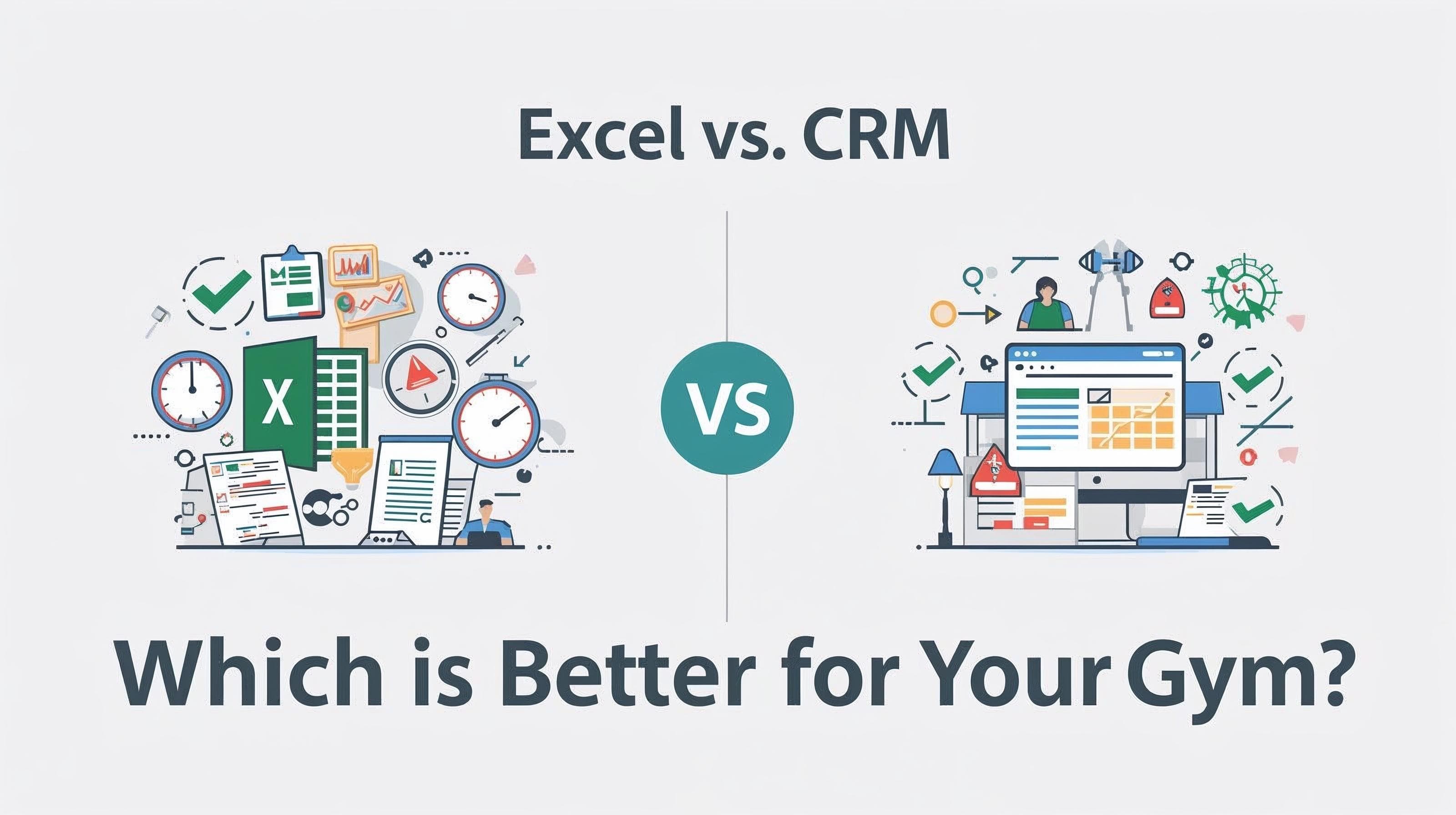
The majority of fitness businesses located within India, (such as gyms, yoga studios, personal trainers, as well as chains and franchises), utilize Excel as the main means of tracking existing leads and clients. Excel has been such a viable means due to its low cost, ease of use and familiarity with users. It’s easy to start tracking trials, inquiries and client status using a spreadsheet to track each one of these items.
As more inquiries come into the business on a daily basis, it becomes more critical that these inquiries get followed up in a timely fashion. Missing out on a potential client because of a missed follow-up, losing a potential trial client because of a missed call back, being unable to retrieve a WhatsApp inquiry, and finally, not knowing which leads turned into clients, will have a direct impact on your bottom line.
This is one of the main reasons why so many fitness business owners start to look at which option will provide them with an easier time growing their client base CRMs or Excel.
The Major Differences Between CRM vs Excel for Fitness Businesses
The biggest difference between CRM vs Excel for fitness businesses is that CRM’s provide automation of follow-up processes and they grow in scalability with the amount of leads that a business has on its books. While Excel has its uses for data tracking purposes on a basic level, it does not have the ability to automate follow-ups or keep track of your lead through the sales pipeline for the gym/sports/fitness industry.
Typical Uses of Excel at Fitness Businesses
Most fitness businesses use Excel for the following reasons:
- Storing prospects and customer data
- Manually managing tracking of trial sessions
- Establishing dates to follow up on for potential clients
- Tracking memberships
- Generating basic monthly output reports based on the existing data stored within the infrastructure of the gym or studio environment.
While this is effective on a very small scale, Microsoft Excel was never intended to be used in the following ways:
- Daily enquiry handling
- Multi-channel leads (phone calls, WhatsApp, advertisements, walk-ins)
- Conversion of trial members to health club membership
- Retention and renewal of existing members/clients
Fitness companies are established on the basis of follow-up with potential trial memberships and clients; therefore it is where an application such as Excel fails.
Here are three limitations of Excel as a CRM Software Application for Fitness Facilities:
1. Missed Opportunities for Follow-Up Post-Trial(s)/Membership
A fitness business relies heavily on timely follow-up from staff when a person completes their trial. Due to this, if the sheet is not maintained by a staff member to keep track of their leads, those leads will simply grow colder. This is one of many reasons that many gyms start looking for CRM software applications specifically designed for fitness facilities.
2. No Centralised Lead Management
Leads in a fitness facility typically originate from multiple sources (e.g. website forms, Google and Meta advertisements, Instagram direct messages, walk-ins, and telephone calls). Excel has no way to automatically capture or store these leads resulting in fragmented and lost lead information.
3. That Excel Does Not Provide Visibility Into Sales Performance
In addition to that, gym owners will have difficulty finding out:
- How many trials occurred this week?
- How many converted to a paid membership?
- Which of their counselors/trainers are their best performers?
The limited visibility provided by Excel makes it challenging to make decisions.
4. Team Members Lack Accountability
When many different employees have access to the same Excel spreadsheet:
1. Duplicate files.
2. Missed info updates.
3. There is no trace of who tracked activity, follow up, etc
5. Non-Scalable Solutions for Rapidly Growing Fitness Companies
The methods for producing 20 leads/month does not apply as easily when you have 200 leads/month. Managing leads using an Excel worksheet can become overwhelming as the business matures and becomes increasingly time consuming and prone to error.
Fitness Businesses and the Benefits of CRMs
A CRM (customer relationship management) system is designed to manage leads, trials, follow-up, memberships and all customer interactions in one platform.
For gyms/studios, a CRM: is capable of
- Automatically capturing all leads
- Sending follow-up reminders
- Tracking every interaction with every customer
- Creating a visual sales pipeline
When comparing a CRM vs. Excel for fitness businesses, a CRM is an active partner in your growth vs. just storage of data.
When Does a Gym Use Excel?
When you start running paid advertising and getting multiple inquiries every day, When you run free trial sessions; When you have multiple staff members conducting sales; When you consistently miss follow-ups or When you have no idea how many prospects have converted to members, you must move to a CRM software for gyms in India.
Benefits of a CRM for a Fitness Businesses
1. Better Conversion from Trial Memberships to Paying Memberships
With automated reminders to contact each trial member, >90% of members will receive timely follow-up calls.
2. Complete Transparency on Your Sales Pipeline
Owners have instant access to leads, scheduled trials, follow-ups due, and closed memberships.
3. Better Accountability for Your Staff
A CRM allows owners to see who contacted which prospect, when they did so, and what action they should take next - this will increase discipline and results.
4. Centralized Member Data
All information about your customers will be stored in a single database that is easy to access and be managed.
5. Ability to Scale Your CRM as Your Business Grows
No matter if you are managing a single gym or multiple gyms, CRM processes can be easily expanded.
How AI-Powered CRM Tools Will Impact Your Success
Modern fitness CRMs are much more than just basic data tracking tools.
AI-powered CRM tools are helpful because:
- They prioritize your hottest leads.
- They provide you with suggestions on when to follow up with a lead.
- They help prevent lead leakage.
- They increase efficiency when generating sales.
This makes a significant difference when evaluating CRM vs Excel for fitness businesses at scale.
CRM vs Excel: Which One Should Fitness Businesses Choose?
CRM is more efficient than Excel for fitness businesses because:
- Follow ups do not require manual work
- Trials are monitored accurately
- Sales pipelines can be seen
- Teams are responsible
- Conversions keep getting better
Excel may be a temporary solution, but CRM is the right one for long, term growth.
Final Thoughts: CRM vs Excel for Fitness Businesses
Excel may be a decent starting point; however, it lacks the capability to handle the sales complexity of fitness businesses. When enquiry volumes increase, Excel turns into a bottleneck that lowers the business's efficiency and conversion rate.
A CRM offers gyms and studios the necessary features to grow sustainably, i.e., structure, automation, and visibility. There is no need for unnecessary complexity when using a tool like CRM-Veda, India's first AI powered CRM for fitness businesses, which is created to facilitate lead management, follow up automation, and trial, to, membership conversion improvement.
FAQs
Is Excel enough for gym leads management?
Excel could be a solution for very small setups. However, gyms that manage daily enquiries and trials have to use a CRM in order to dodge missed follow ups and losing money.
When does a fitness business need to move from Excel to CRM?
The moment the volume of leads grows, several staff members are involved in sales, and the conversion rate of trials to sales decreases, the use of CRM becomes compulsory.
Is CRM costly for small gyms in India?
Contemporary CRM instruments that are tailored to the fitness industry are not only affordable and scalable but also a perfect fit for small gyms.
Ready to Move Beyond Excel?
If you are tired of leads slipping through your fingers and want to start converting more trials into paid memberships, then it might be the right time to move to a CRM that is specifically designed for fitness businesses.
Schedule a free demo of CRM-Veda for fitness businesses and find out how your sales can be accomplished in a much easier, quicker, and efficient way.